Bruxism treatment in Zurich
Persistent teeth grinding and jaw clenching can overload the chewing muscles. This results in tension in the masticatory muscles, pain, and increased strain on the teeth and jaw joints. If conservative measures are insufficient, muscle relaxants such as botulinum toxin can alleviate these symptoms.


Treating bruxism
Clarify and treat chronic abscesses and painful nodules with an experienced dermatologist at the Derma Medical Clinic in Zurich - Sihlcity
Treating teeth grinding and jaw clenching
Bruxism refers to the unconscious clenching or grinding of teeth. Most people do not notice their teeth grinding at first. Signs include morning jaw pain, tense chewing muscles, headaches, or wear and tear on the teeth. Due to permanent muscle activity, the chewing muscles become stronger over time. Some sufferers report feelings of tension in the face, discomfort in the jaw joint, or pain in the neck and temple area. Botulinum toxin can be used to reduce the activity of the chewing muscles.
Treatment Options
Procedure
Examinations
Duration
Socially presentable after treatment
Sports, Swimming, Sauna
Cost
When the jaw and muscles are under permanent tension
Teeth grinding and jaw clenching do not only affect the muscles. Due to the high forces involved, strain is placed on the teeth, periodontium, and jaw joints over many years. Characteristic consequences include worn tooth surfaces, fine cracks in the enamel, or increased tooth sensitivity. Clicking sounds in the jaw joint or restrictions when opening the mouth can also occur. In some sufferers, pronounced chewing muscles develop. This makes the lower part of the face appear wider or more angular. Treatment with botulinum toxin can relieve the muscles.
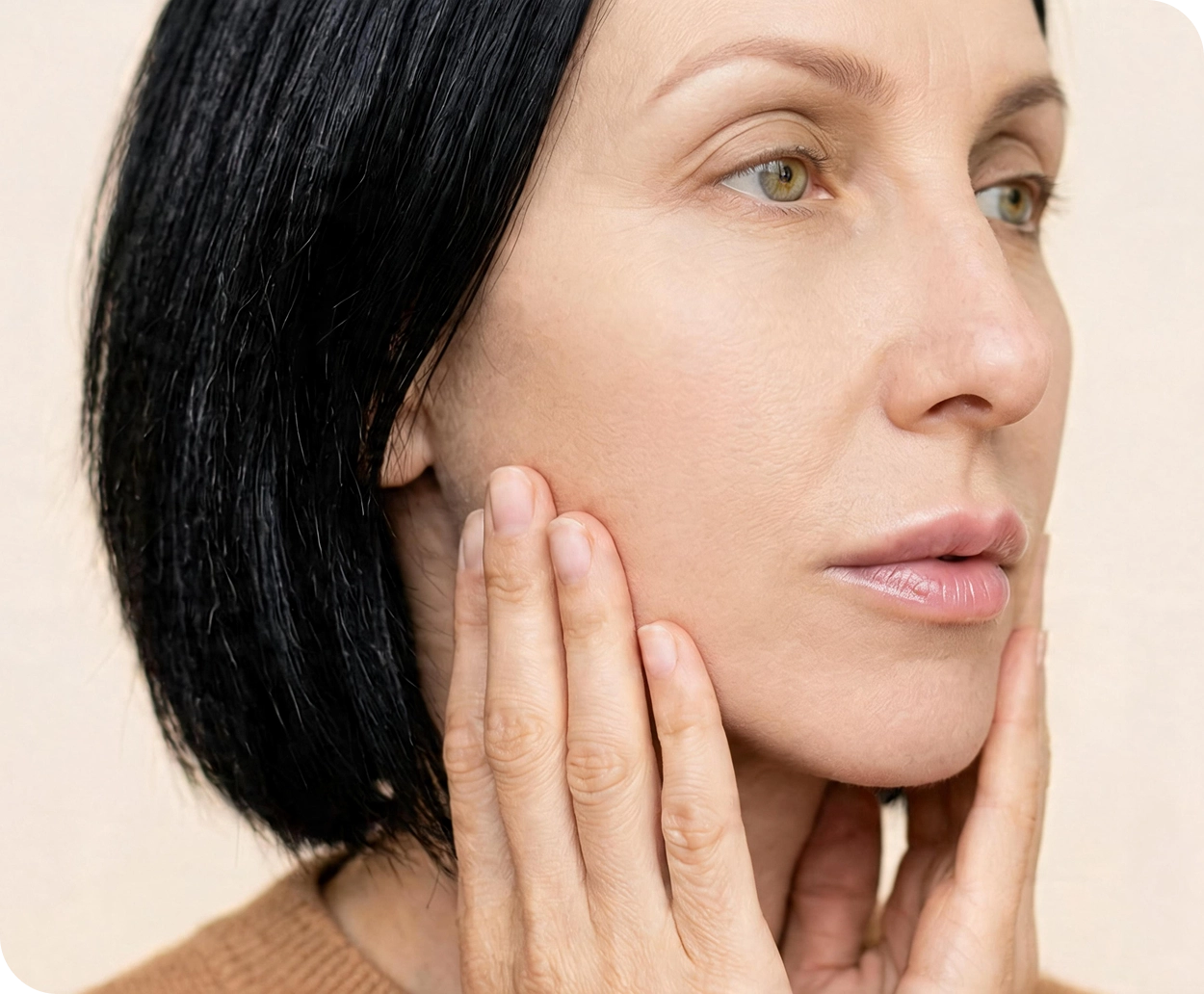
Botulinum toxin for narrowing the lower part of the face
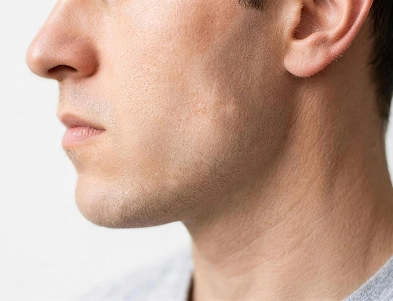
Strongly developed chewing muscles can make the lower part of the face appear wider and more angular. By treating the masseter with botulinum toxin, we can subtly reduce the muscle volume. As a result of the treatment, the jaw region appears narrower and the facial contour potentially more harmonious.
Treating bruxism with botulinum toxin
When is treatment appropriate?
When the chewing muscles are permanently overactive, leading to symptoms or consequential damage. For example, we use botulinum toxin if symptoms persist despite a bite splint or if the chewing muscles are very pronounced.
Which therapeutic approach is used?
Botulinum toxin is targetedly injected into the masseter, one of the most relevant chewing muscles. Muscle activity decreases, while normal function during chewing or speaking is not restricted and remains completely intact. The treatment goals: effective relief of the muscles and thus a reduction in symptoms.
What happens during the treatment?
After the specialist examination, the treatment areas are marked, and the muscle relaxant is injected into the chewing muscles using fine needles. The treatment takes only a few minutes. The effect develops continuously over the following days and weeks.
Why have bruxism treated by us?

Medical assessment of symptoms
Our specialists assess the muscles, symptoms, and individual stress factors.

Experienced Doctors
The treatment is performed by experienced specialists with high expertise in the application of botulinum toxin in the facial area.

Precise treatment
The dosage is individually adapted to the muscle condition, symptoms, and face shape.

Individual Consultation
We advise you individually and explain the relevant treatment options as well as alternatives and possible supplementary measures.
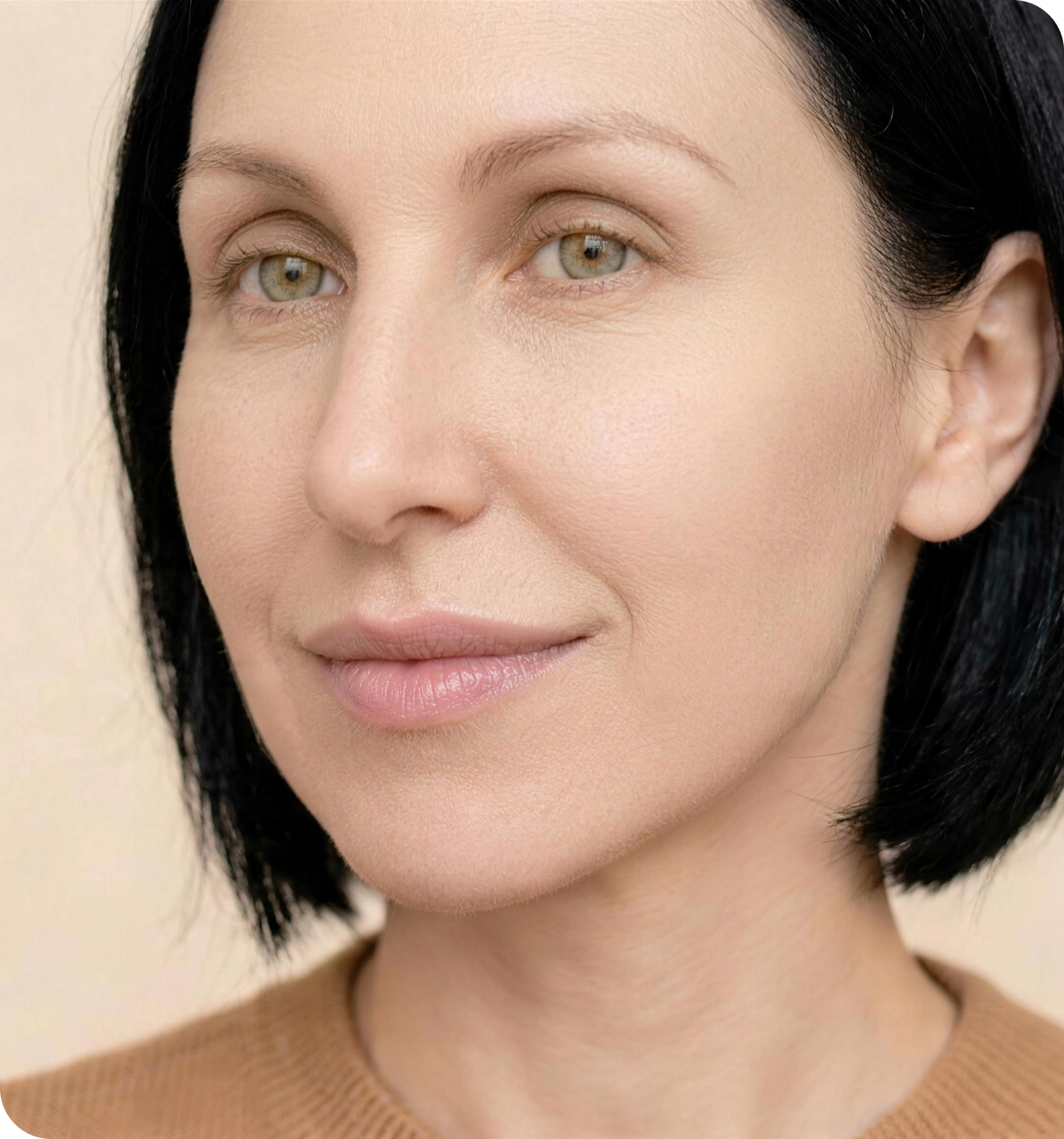
Procedure
Initial consultation & assessment
In the first step, we record your symptoms in detail and carefully examine the chewing muscles to understand the causes precisely.
Treatment plan
Based on these results, we discuss with you whether treatment with botulinum toxin makes sense and which dosage corresponds to your individual situation – for a result that provides noticeable relief while appearing natural.
Treatment
The injections are performed precisely into the affected muscle areas – targetedly placed to noticeably relieve the chewing muscles and achieve a harmonious result.
Follow-up
After a few weeks or months, we review the success of the treatment with you and sensitively adjust the therapy if necessary.
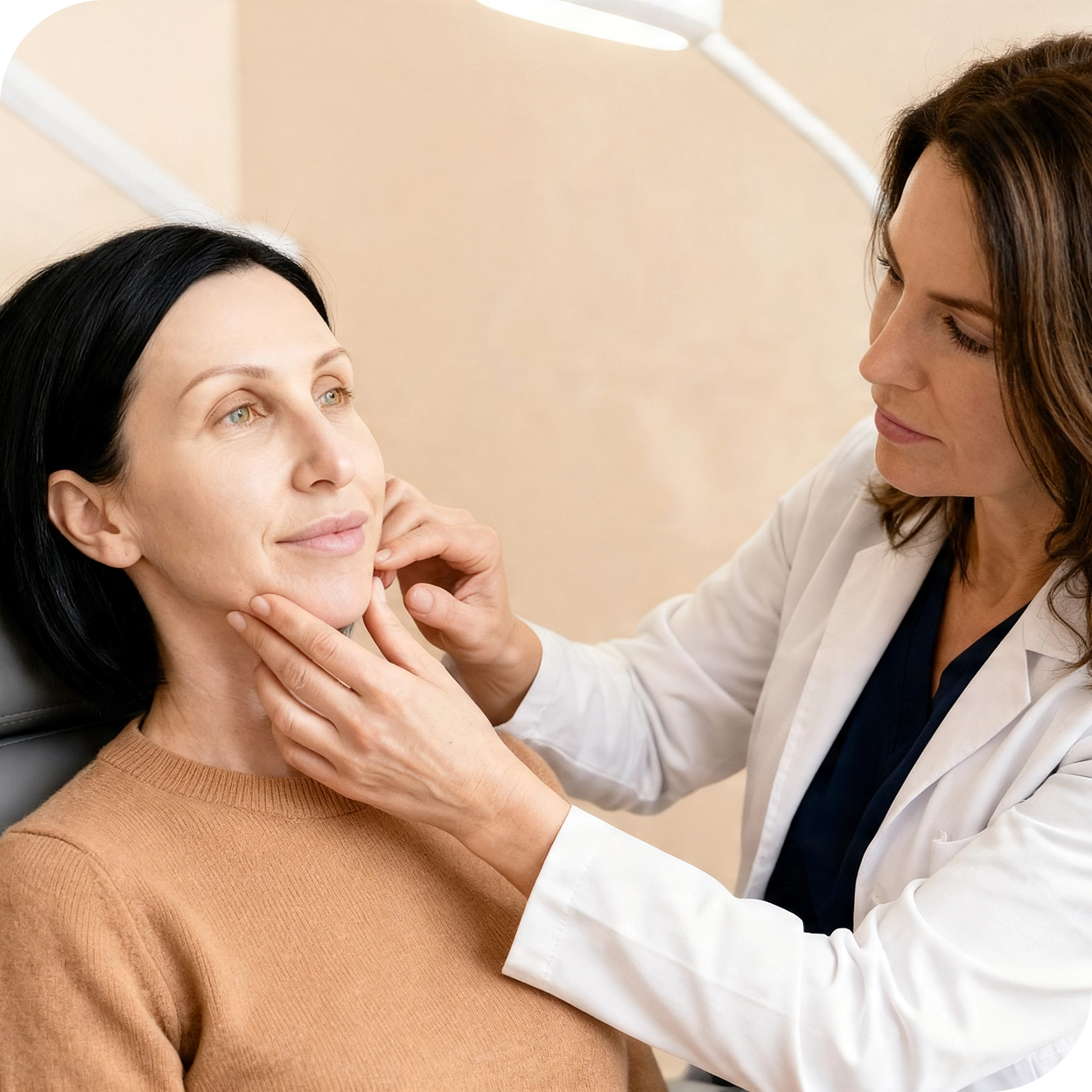
“Bruxism often affects the entire chewing musculature. Targeted treatment can noticeably and visibly reduce the permanent strain.”
At our clinic, aesthetic treatment is carried out by an experienced specialist in dermatology:
Dr. med. univ. Martina Tröbinger is a specialist in dermatology and venereology (FMH), laser medicine FMCH, and holds a certificate of proficiency in laser treatments FMCH. She treats patients with bruxism, taking into account all facets of the symptoms as well as individual facial anatomy.

What you can expect from us
Medical expertise meets modern treatment concepts
We view bruxism in the context of muscles, face shape, symptoms, and everyday situations.
Everything under one roof
Consultation, treatment, and follow-up checks take place at our Derma Medical Clinic in Zurich – from a single source and with the same expert care from the initial analysis to long-term aftercare.
Botulinum toxin applied with precision
The treatment is individually tailored to the strength and volume of the chewing muscles.
Individual planning instead of standard solutions
We adapt the treatment individually to your personal situation – your health requirements are always our main focus.
What patients say about our treatment
Would you like to find out if botulinum toxin for bruxism is right for you?
We are happy to advise you personally at Derma Medical Clinic in Zurich.
FAQ
Frequently asked questions about the treatment of bruxism
What is bruxism?
The term bruxism stands for unconscious teeth grinding or jaw clenching. The muscle activity usually occurs unconsciously at night during sleep, but can also occur during the day. Many sufferers do not notice the grinding at first. Stress is one of the typical causes.
How do I know if I grind my teeth?
Signs include morning jaw pain, tense chewing muscles, feelings of pressure in the face, or recurring headaches. Also, worn teeth, sensitive tooth surfaces, or indications from your dentist.
What symptoms can bruxism cause?
Teeth grinding and jaw clenching can lead to muscle tension, pain in the jaw joint, tension headaches, and discomfort in the neck or shoulder area. Further symptoms can include tooth damage and increased strain on the jaw joint.
How does botulinum toxin work for bruxism?
The muscle relaxant botulinum toxin reduces the activity of the overused chewing muscles. This decreases the force of clenching and grinding. The over-tense muscles are relieved, while normal chewing and speaking are preserved.
Who is treatment with botulinum toxin suitable for?
Treatment can be useful if bruxism leads to symptoms, the chewing muscles are very pronounced, or symptoms persist despite a bite splint. Whether botulinum toxin is a possible solution is assessed and discussed individually after a thorough specialist examination.
Does botulinum toxin replace a grinding splint?
A bite splint protects the teeth from further wear. The muscle relaxant botulinum toxin reduces muscle activity. Both treatments pursue different goals and can complement each other effectively.
Can botulinum toxin help with jaw pain?
If the symptoms are caused by overactive chewing muscles, the treatment can contribute to noticeable relief. Whether the pain is actually related to bruxism should be clarified beforehand by a specialist and a dentist.
When does the effect begin?
The effect usually begins within a few days. The full effect typically develops within two to four weeks.
How Long Does the Effect Last?
The effect lasts in most cases for three to six months. How long the treatment lasts in individual cases depends, among other things, on muscle activity and individual metabolism.
Does the chewing muscle get smaller through the treatment?
With pronounced chewing muscles, the muscle volume can decrease over time. This makes the lower part of the face appear narrower and less angular.
Does my face change through the treatment?
The treatment primarily targets muscle activity and symptoms. With very strong chewing muscles, the face shape may change slightly over time. The chewing muscle is used less intensely and, like other muscles in the body, breaks down over time.
Can I eat normally after the treatment?
Normal chewing function is completely preserved. Only the excessive tension and force development of the chewing muscles is reduced.
Is the treatment painful?
The injections are performed with very fine needles. Most patients find the application well-tolerated. The treatment takes a few minutes and can even be done during a lunch break.
Can botulinum toxin reduce the masseter and narrow the face shape?
With pronounced chewing muscles, we can targetedly inject botulinum toxin into the masseter muscle. The muscle volume decreases over time. As a result, the lower part of the face can appear narrower and the facial contour more harmonious. This treatment is performed, for example, for patients who desire a softer or V-shaped face shape.