Allergic asthma
Diagnose and treat allergic asthma - by experienced allergists and dermatologists at Derma Medical Clinic in Zurich - Sihlcity
Allergic asthma
Chronische Abszesse und schmerzhafte Knoten durch erfahrenen Hautarzt abklären und behandeln in der Derma Medical Clinic in Zürich - Sihlcity
Shortness of breath, allergic dry cough or wheezing – Diagnosis and treatment of allergy-related respiratory problems
Examinations
Allergy testing
Blood test
Procedure
Initial consultation incl. Allergy Test
Duration
30 minutes
Allergic Asthma at a Glance
What is allergic asthma?
Allergic asthma – also known as bronchial asthma or allergy-induced asthma – is a chronic inflammation of the airways triggered by allergens such as pollen, dust mites, or animal dander.
Typical symptoms include wheezing, coughing, shortness of breath, or chest tightness, often in conjunction with known allergies like hay fever or neurodermatitis.
Symptoms often occur in attacks, especially during physical exertion, at night, or upon contact with pollen, dust, or animal dander.
This diagnosis is particularly recommended if you…
- regularly suffer from shortness of breath, wheezing or chest tightness
- experience coughing or shortness of breath during pollen season, with house dust or animal contact
- already suffer from hay fever or a pollen allergy and your bronchial tubes are now also affected
- frequently cough at night or have difficulty breathing deeply
- notice that physical exertion – e.g., during sports – increasingly leads to breathing problems
- suspect that your respiratory problems are allergy-related

What is allergic asthma?
Allergic asthma – also known as bronchial asthma or allergy-induced asthma – is a chronic inflammation of the airways triggered by allergens such as pollen, dust mites, or animal dander.
Typical symptoms include wheezing, coughing, shortness of breath, or chest tightness, often in conjunction with known allergies like hay fever or neurodermatitis.
Symptoms often occur in attacks, especially during physical exertion, at night, or upon contact with pollen, dust, or animal dander.
Who benefits from an allergic asthma diagnosis?
This diagnosis is particularly recommended if you…
- regularly suffer from shortness of breath, wheezing or chest tightness
- experience coughing or shortness of breath during pollen season, with house dust or animal contact
- already suffer from hay fever or a pollen allergy and your bronchial tubes are now also affected
- frequently cough at night or have difficulty breathing deeply
- notice that physical exertion – e.g., during sports – increasingly leads to breathing problems
- suspect that your respiratory problems are allergy-related
Treatment
First, we discuss your symptoms and allergic history. At Derma Medical Clinic, we perform the following examinations:
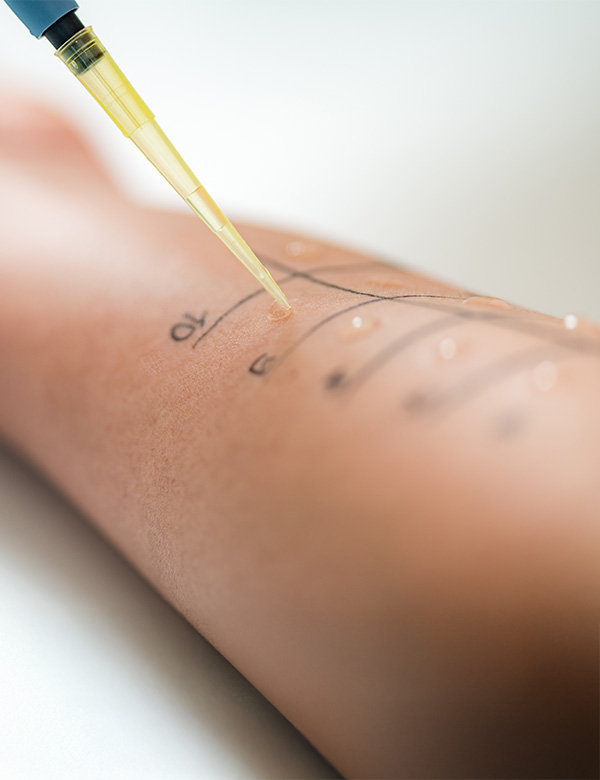
- Prick test for common allergens (e.g., grass pollen, dust mites, animal dander)
- Blood test if necessary for more precise identification (Small amounts of various allergens are applied to the skin on the forearm and gently pricked.)
What happens during the treatment?
The goal is to alleviate symptoms and prevent asthma attacks.
Depending on the findings and severity of symptoms, the following options are available:
- Asthma inhalers that widen the bronchial tubes and inhibit inflammation
- Desensitization for suitable triggers such as pollen, house dust, or animal dander
How is allergic asthma diagnosed?
Initial Consultation
During the first appointment, we will discuss your symptoms and possible connections in detail.
Allergy Test
Afterward, we conduct an allergy test. Depending on the findings, a blood test may also be useful.
Therapy recommendation
Depending on the trigger and symptoms, you will receive appropriate treatment, e.g., with asthma inhalers or hyposensitization.

At the Derma Medical Clinic, allergy treatment is provided by Dr. Markus Dendorfer, a specialist in dermatology and a specialized allergist.
He has many years of experience in the diagnosis and treatment of allergic diseases, from hay fever to complex allergic reactions.

Dr. med. Markus Dendorfer
Board-certified Specialist in Dermatology & Venereology FMH
What you can expect from us
Identify allergies
Many affected individuals don’t know exactly what’s behind their shortness of breath or chronic cough. We specifically test for common triggers such as pollen, house dust, or animal dander, directly in our practice.
Child-friendly Diagnostics & Support
With children, we also proceed carefully, explain things in an age-appropriate manner, and support families with clear and empathetic guidance throughout the process.
Dermatology and Allergology
Many patients with allergic asthma also show skin reactions. At Derma Medical Clinic, you receive both – allergy diagnosis and skin diagnostics – from a single source.
Everything under one roof
You receive diagnosis, medical treatment, and cosmetic support in one place. This means you have fixed contact persons, short distances, and coordinated care, from the initial examination to aftercare.
Do you suspect that your respiratory problems are allergy-related, but don't yet have a confirmed diagnosis?
Book an appointment now for an allergic asthma diagnosis at Derma Medical Clinic in Zurich – Sihlcity.
FAQ – Frequently Asked Questions about Allergic Asthma
What is allergic asthma?
Allergic asthma – also known as allergic bronchial asthma – is a chronic respiratory disease. It is triggered by allergens such as pollen, dust mites, or animal dander. This leads to inflammation and narrowing of the bronchial tubes – with typical symptoms like coughing, shortness of breath, or chest tightness.
What symptoms occur with allergic asthma?
Typical symptoms include:
- dry, paroxysmal cough – especially at night or early morning
- wheezing or rattling breath
- shortness of breath during physical exertion or contact with the allergen
- chest tightness
Symptoms can occur seasonally (e.g., with pollen allergy) or year-round (e.g., with dust mites).
How does allergic asthma develop?
The cause is an oversensitive reaction of the immune system to inhaled allergens. Upon contact with pollen, mites, mold, or animal dander, the bronchial mucosa becomes inflamed – the airways narrow, leading to typical asthma symptoms.
How is allergic asthma diagnosed?
Diagnosis is made through:
- detailed anamnesis (symptoms, triggers, allergies)
- if necessary, lung function measurement (e.g., peak flow, spirometry – in cooperation with specialist practices)
- Allergy tests (prick test or IgE blood test)
The goal is to find the cause and correctly classify the severity.
What helps with allergic asthma?
Treatment consists of several components:
- Avoid allergens (e.g., pollen, house dust, animal dander)
- Asthma inhalers (e.g., with cortisone or bronchodilating agents)
- if necessary: anti-allergic medications
- Hyposensitization for causal therapy for certain allergens
What is the difference between desensitization and hyposensitization?
In medical terminology, desensitization and hyposensitization mean the same thing: a specific immunotherapy in which the body is gradually accustomed to an allergen. The goal is to reduce or completely prevent the allergic reaction in the long term. The term “hyposensitization” is more commonly used professionally, while “desensitization” is more common in everyday language.
Can hay fever lead to asthma?
Yes. Doctors refer to this as an ‘etagenwechsel’ (change of level) when untreated hay fever spreads to the lower airways. If recognized and treated early, the risk of allergic asthma can be significantly reduced.
How does hyposensitization for allergic asthma work?
Specific immunotherapy (hyposensitization) helps the immune system get used to the allergen. It usually takes place over 3 years – with tablets (SLIT) or injections (SCIT). For pollen or dust mite allergies, it is often very effective and can significantly improve asthma symptoms long-term.
What to do during an asthma attack?
During an acute asthma attack, emergency inhalers with bronchodilating agents help. Important: The inhaler should always be readily available. In severe cases, an emergency kit should also be on hand – and medical help requested if necessary.
Is allergic asthma curable?
Complete cure is rare. However, with the right therapy – consisting of allergen avoidance, medication, and regular check-ups – allergic asthma can usually be well controlled. Many affected individuals live largely symptom-free as a result.